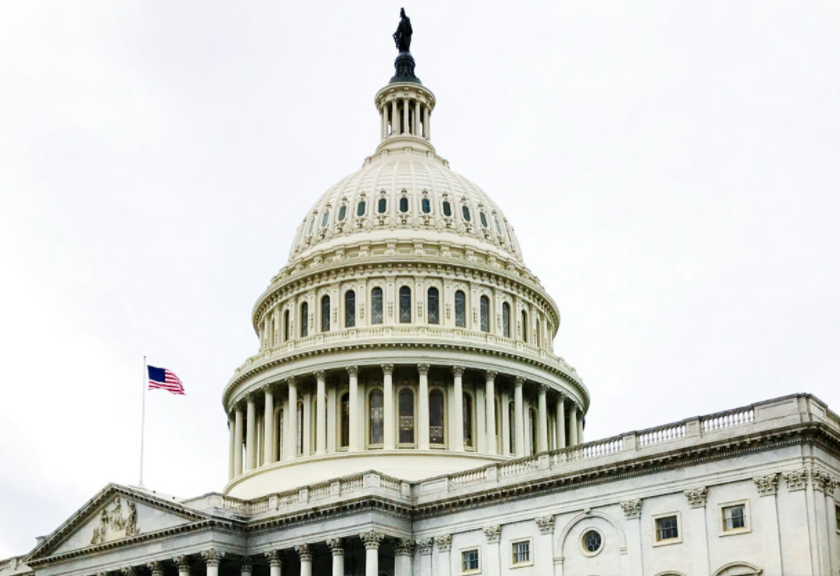
The United States has in the past been idealized as a model government, although historically, there has repeatedly been conflict in the halls of power. This is the nature of democracy. It can be disorderly. However, many American citizens, if asked whether they would prefer to live in the United States or some other nation, would most likely choose to remain here. Despite the current populist disorder that grips the nation, the United States has much in it to be admired.
Increasingly, however, the 21st century has seen Americans feeling powerless to effect change, which has brought about a populist wave in national politics over the last decade. Political polarization between Democrats and Republicans has intensified to the point where political parties are clustering into demographic blocs that reflect rigid ideological agendas. Yet the two extremes do not represent most Americans. Political Independents — those unaffiliated with either major party — now constitute the largest share of the electorate at roughly 45 percent, surpassing both Republicans and Democrats, who each account for only 27 percent.
Yet this numerical advantage does not translate into political influence. Lacking a shared platform, independents disperse their votes between the two major parties or abstain altogether, leaving them without collective power.
Social disorder opens people to change — and it is into this space that the Church can act as a reformative agent of moral and ethical integrity.
Today, we are faced with uprisings on both sides of the political spectrum. Furthermore, in the last year, many of America's traditional institutions have been challenged and partially dismantled in scope and power. Yet this disorder creates an opportunity for the Church. Social uncertainty opens people to ideas of change. When things we once treasured reveal how little substance they have, we are confronted with the truth that neither our resources nor our influence can stop the crisis. Therefore, when social disruption arises, there is potential for new ideas — and it is into this space that the Church can act as a reformative agent of moral and ethical integrity.
How these acts of reform are carried out is open to discussion. For the Church, reform in the United States is not necessarily a political act. Although evangelicals are a core group within Republican politics, they may not be monolithic in their allegiance.
If this is the case, then church members should look beyond mere political activism as the preferred method and explore other opportunities to bring positive change to society. As the Church, Jesus Christ is our model. He stood outside of cultural and religious limitations and announced the Kingdom of God to earth — not as something arriving, but as already present.
Unlike earthly political systems, the Kingdom of God offers a fundamentally different vision of community — one centered in Christ, His teachings, and the eschatological fulfillment of eternity.
Therefore, as Christ-followers, we should also display a different kingdom to society. In contrast to political systems that attempt to manage human nature, the Kingdom of God centers itself in Christ, His teachings, and the eschatological fulfillment of eternity. Christ's model presents its members as equal, with all having access to divine favor — co-heirs with Christ, called to live in mutual community.
Members of this kingdom do live in the tension of the present juxtaposed against the future. How the Church lives out the reality of a future kingdom into the present disorder of this world is a matter of conscience and the leading of the Holy Spirit. The Church in all its amazing diversity will need to determine how to live redemptively and proactively, each within its own communal body of believers.
Gallup: New High Identify as Political Independents
Chip Rotolo and Gregory A. Smith, "White evangelicals remain among Trump's strongest supporters, but they're less supportive than a year ago," Pew Research Center, Feb. 9, 2026.